Green advocates see contradiction in coal-fired ethanol plants

Thursday, March 08, 2007

From an Associated Press story by Tom Webb in the LaCrosse Tribune:

HERON LAKE, Minn. — The latest trend in the green world of ethanol is a surprising one: coal.

Minnesota’s first coal-fired ethanol plant soon will begin operation in Heron Lake, and it won’t be the last. The high price of natural gas is enticing new plant owners to embrace coal power. But while it may make economic sense, the choice of this fossil fuel to make a renewable one has some people shaking their heads.

Madison Peak Oil Group meeting, Feb. 8

Wednesday, March 07, 2007

Everyone is welcome to join the discussion.
Peak Oil Discussion Group
March 8, 2007

Meeting Date and Time: February 8, 2007, 12:00 – 1:00 pm
Location: RENEW Wisconsin Conference Room, 222 S. Hamilton Street

DRAFT Agenda

1. Introductions

2. Announcements/miscellaneous
a. Biofuels conference, April 20

3. Activities
a. Presentation on Russia
b. Participation in West Waubesa Preservation Coalition event
c. Tour of Jeff Riggert’s renewable energy installations

4. Other/discussion

5. Next meeting: April 5

Investor Pickens says peak at hand

Tuesday, March 06, 2007

From The Energy Bulletin:

Texas oilman Pickens says global oil production at its peak
Jim Krane, Associated Press

Legendary Texas oilman T. Boone Pickens sees today's stubbornly high oil price as evidence that daily global production capacity is at - or very near - its peak.

If demand for crude oil rises beyond the current global output of roughly 85 million barrels per day, Pickens told The Associated Press, prices will rise to compensate and alternative sources of energy will begin to replace petroleum.

...Forbes publisher Steve Forbes challenged Pickens' assumptions during an exchange in the conference, saying political - not technological, or geological - roadblocks stood in the way of increasing the world's oil output. With the right incentives in places such as Mexico more oil could be brought to market and prices could drop, Forbes said.

Pickens responded by saying that Mexico is a declining producer of oil, as are most other countries, naming the United States, Norway, Britain, Canada and soon, Russia.

Recent ruminations

Monday, March 05, 2007

Wonderful Hans Noeldner provided the following thoughts:

If conservation is the cheapest form of energy, then proximity is the cheapest form of transportation. Which is to say, nothing beats being there already.
---
The problem of America’s profligate resource usage is remarkably simple: a great excess of nonessential and often detrimental employment for fossil-fuel consuming machines, and a great shortage of meaningful, useful work for human beings.
---
Our attitude towards our twin addictions to oil and the automobile resembles nothing so much as the habit of alcoholics to vociferously deny that intoxicants are the vehicle of their demise.

Distorting Space & Time
-----------------------
By collapsing a mile into one or two minutes, the automobile in motion has so profoundly distorted our sense of space and time that few living Americans comprehend the nature of a truly walkable community. And the automobile further warps reality when at rest. The amount of real estate “consumed” by only four or five off-street surface parking stalls would suffice for a modest-sized retail business and several floors of residential units. Multiplied by hundreds and thousands in a community, the resulting patchwork of surface parking scatters day-to-day and week-to-week destinations over miles rather than blocks, thereby establishing a ceiling on density well below practical thresholds for pedestrians, cyclists, and public transit users. Multiplied by a billion and more, accommodations for the automobile have rendered the greater portion of modern-day “developed” America unfit habitation for the non-motorist. The species homo automobilicus dominates the field.

No Madison Airport?

Friday, March 02, 2007

Petroleum and Natural Gas Watch
by Michael Vickerman, RENEW Wisconsin
February 27, 2007, Vol. 6, Number 4

Over the weekend I came across a web site (www.nomadisonairport.org) that advocates shutting down Dane County’s airport and moving it outside Madison city limits. The people behind the web site, mainly east side residents fed up with the increasingly obtrusive levels of jet noise in their back yards, envision a New Urbanist community springing up from the acres of tarmac where jets once taxied to and from the gates. Deriding the neighborhood surrounding the current airport as a “ghetto”, the web site states that the new airport could be situated in a greenfield location far from town, presumably in an area populated by half-deaf farmers too busy plowing and fertilizing their fields to notice the increase in jet traffic.

To airport relocation supporters—no doubt all Madison residents--this proposal is pure win-win. The skies become quieter above Madison, while its property tax revenues swell from the mixed-use developments rising up on what had been county-owned property. That Madison’s gain would come at the expense of an outlying township not yet overrun by commuter households is of little concern to the proponents. The objective here is simple: to find a place outside of Madison where noisy jets can ferry travelers to and from the metro area without disturbing Madison residents.

Continued here.

IndyCar Switches to 100 Percent Ethanol

Saturday, February 24, 2007

According to a story on the EERE Web site:

Fuel from corn is now powering some of the highest-tech race cars in the world, as the IndyCar Series has switched its fuel to 100 percent ethanol. IndyCar had been using methanol fuel but started using 10 percent ethanol last year and committed to switch to 100 percent ethanol this year. In a recent "Open Test" at Daytona International Speedway, all 17 drivers and their teams had their first chance to try out the fuel, and they gave it their approval and support. "I really didn't notice any difference at all, which I think is the point," said 2005 IndyCar Series champion Dan Wheldon.

Biodiesel short course, April 2-4

Wednesday, February 21, 2007

The Consortium for Education in Renewable Energy Technology (CERET) is pleased to announce that Madison Area Technical College (MATC) is offering a new 1-credit short-course "Introduction to Biodiesel Fuel" on April, 2-4, 2007. This class may be applied towards the CERET Certificate in Renewable Energy Technology that is offered through the college.

Course details are included in the pdf file attached to this email, and are also available through MATC's online timetable:
http://matcmadison.edu/matc/ASP/showschedule.asp?CourseNum=10-468-122&cr=1

For more information on the CERET Renewable Energy Certificates as well as our online course offerings for 2007 please visit the CERET website: www.ceret.us, or contact Anne Scott at 608-246-6800.

Wisconsin Farmers Union sets renewable energy policy

Tuesday, February 20, 2007

The Dunn County News reports on resolutions adopted at the 76th annual state convention of the Wisconsin Farmers Union:

In the area of renewable energy, WFU members adopted policy that calls for renewable energy expansion, to include biodiesel and other renewable incentives, in addition to the existing market for ethanol.

“We’re moving toward becoming a self-sufficient bioeconomy,” said [WFU President Sue]Beitlich. “It’s no longer a question of the validity or viability of renewable energy sources, but of when biofuels will be the choice of the majority of Americans. It will happen, and we’d like to see it happen soon. We have the technology; we just need continued incentives to make it an attractive alternative to our current system of petroleum-based products.”

Peak oil monthly meeting March 8

Monday, February 19, 2007

The Madison Peak Oil Group will meet on March 8, not March 1, from 12:00 noon to 1:00 p.m. in the conference room of RENEW Wisconsin, 222 S. Hamilton Street.

Also mark your calendars for a timely presentation by Madison Peak Oil Group’s own David Knuti:

RUSSIA AND U.S. ENERGY SECURITY
David Knuti, U.S. Commercial Service (retired)
Tuesday, March 13, 7:00 PM
UW Memorial Union

Russia is the world’s second largest oil exporter and largest natural gas exporter. Although only a minor supplier to the U.S., Russia plays a vital role in U.S. energy security by maintaining the precarious balance of world energy supplies without shortages or punishing price increases. No country other than the U.S. is such an important producer, refiner, long distance transporter, and consumer of energy. It also a key factor as a transit country for the oil and gas of other countries. For better or worse, world energy security depends on Russia’s future performance in these roles.

For more information on the briefings, contact Ed Blume, eblume@renewwisconsin.org or 608.819.0748.

So much for the federal commitment to end oil addiction

Thursday, February 15, 2007

It would be funny if it weren't so pathetic!

Federal Staffing Shortage Holds Up World's First Cellulose Ethanol Plant
2/15/2007 6:25:00 AM
(C) 2007 Mclatchy-Tribune News Service.. All Rights Reserved

WASHINGTON - All that's standing between the United States and the world's first cellulose ethanol plant is an obscure Washington office staffed by one federal contractor.

The office in the U.S. Department of Energy opened last summer to provide federal loan guarantees for producing clean energy and innovative technologies.

However, its sole employee hasn't been able to do more than literally open the mail. More than 100 so-called pre-applications for loan guarantees have arrived, only to be shelved because the Department of Energy hasn't had the money to hire more staff to assess them.


Read the full story.

Wisconsin's largest solar electric system.

Wednesday, February 14, 2007


The Urban Ecology Center in Milwaukee now boasts a 44 kW solar electric system, the largest in the state. Focus on Energy assisted with financing the installation.

Our insatiable appetite for coal

Tuesday, February 13, 2007

Tom Content and Lee Bergquist cover Wisconsin's addiction to coal in an impressive series of articles in the Milwaukee Journal Sentinel. One story includes a terrific quote from the Sierra Club's Bruce Nilles: “We're at the forefront of going backwards."

CLIMATE CHANGE: GLOBAL WARMING AND WISCONSIN

Wisconsin generates greenhouse gases linked to global warming at a rate that is about one-third faster than the national average, a Journal Sentinel analysis found.

This trend will only escalate because the state's utilities are on the leading edge of a national building boom of coal-burning power plants, fueled by an ever-increasing appetite for electricity.

The Giant Sucking Sound, Revisited

Monday, February 12, 2007

Petroleum and Natural Gas Watch
by Michael Vickerman, RENEW Wisconsin
February 12, 2007, Vol. 6, Number 3

Remember the metaphorical “giant sucking sound” that Ross Perot invoked in the 1992 presidential debates? Perot employed that image to characterize the rapid exodus of jobs to Mexico that would surely result from ratifying the North American Free Trade Agreement. Fifteen years later, that vivid phrase could appropriately describe the increasingly desperate circumstances befalling Cantarell, Mexico’s largest oilfield, situated about 50 miles off the coast of the Yucatan Peninsula. The giant sucking sound you might hear at Cantarell is what happens when hundreds of oil wells begin drawing gas and water from the very reservoirs that used to yield copious quantities of petroleum. It’s the sound of an oilfield rolling over its peak.

To unknowing American ears, the name Cantarell evokes a casual, Southwestern feeling, more suggestive of a dude ranch than the world’s No. 2 oil field. By far the most productive oil reservoir in the Western Hemisphere, Cantarell was yielding more than two million barrels per day (bpd) as recently as 2005, outperforming all other fields save mighty Ghawar in Saudi Arabia. At $50 per barrel that level of production translated to $100 million a day. When a wealth generator of that magnitude starts to sputter and lose productivity, other oilfields must pick up the slack or else the Mexican economy is bound to take a hit.

Continue reading here.

Focus on Energy presentation, noon, Feb. 12

Friday, February 09, 2007

Noon to 1:00 p.m.
Room 400 SE, State Capitol

RENEW Wisconsin and the Madison Peak Oil Group invite legislators, aides, Capitol staff, lobbyists, agency staff, and the general public to a series brown-bag lunches on energy-related issues.

Without a doubt, this legislative session will see several bills and administrative rules on energy issues, and the brown-bag lunches will provide the background and context to help with a better understanding of the underlying issues. The briefings will be non-partisan and will not offer positions on any proposals pending at the time.

Focus on Energy: Status and Future, presented by Kathy Kuntz, Wisconsin Energy Conservation Corporation. Focus on Energy works with eligible Wisconsin residents and businesses to install cost effective energy efficiency and renewable energy projects. Focus information, resources and financial incentives help to implement projects that otherwise would not get completed, or to complete projects sooner than scheduled. Its efforts help Wisconsin residents and businesses manage rising energy costs, promote in-state economic development, protect our environment and control the state's growing demand for electricity and natural gas.

For more information contact Ed Blume.

Winter newsletter online

Thursday, February 08, 2007

This winter's edition of the Wisconsin Renewable Quarterly, now posted online, includes the following articles:

RENEW and Clean Wisconsin Defend Wind Power Project;
We Energies Cops National Honors;
Don Wichert: RENEW Founder and Tireless Advocate;
How I Fell in Love with My Solar Dryer;
PSC Approves WE Wind Project;
Doyle Sets Plans to Expand Renewables.

Merrill fitness club uses sunlight to warm pool

Tuesday, February 06, 2007

A story by Amy Olson in the Wausau Daily Herald reports on a solar water heating project supported in part by Focus on Energy:

As a child, Paul Kienitz and his family heated their house with wood and grew their own vegetables. Now, the owner of Riverside Athletic Club in Merrill is heating its pool by harvesting sunlight.

Kienitz opened his fitness club 25 years ago. In 2002, he added a pool and whirlpool.

He had long thought about ways to save energy after the addition was built. The 60-foot long pool alone holds 50,000 gallons of water, and the whirlpool holds 800 gallons, Kienitz said. Add in showers for the 250 to 300 people who use Riverside Athletic Club each day, and you get a hefty utility bill.

In March, he installed solar panels with the help of a grant from Focus on Energy, a program that works with Wisconsin business owners and residents to boost energy efficiency and support renewable energy projects.

Largest Wisconsin Solar Array to be Dedicated February 10

Monday, February 05, 2007

Milwaukee, WI – At a huge 44.4 kilowatts, the solar electric panels now covering the roof at the Urban Ecology Center are the largest such solar installation in the state of Wisconsin. The system, originally installed in 2003 by H&H Solar Energy Services of Madison, started out as a 48 module array. With the addition of 208 solar panels, the completed system now consists of 256 Kyocera solar panels mounted directly to the Center’s metal standing-seam roof. The Kyocera panels are expected to produce over 55,000 kilowatt-hours each year.

The Urban Ecology Center is a unique, neighborhood based, non-profit community and nature center located in Milwaukee's historic Riverside Park.

A dedication ceremony to announce the completion and activation of the system is planned for Saturday, February 10th, at 1:30 p.m. as part of the Urban Ecology Center’s public Winterfest event for families.

Chairman Daniel R. Ebert of the Public Service Commission of Wisconsin which oversees electricity, gas, and telecommunication issues in the state is expected to be on hand to help christen the new system.

Read more here.

Update on new energy law, Feb. 5

Friday, February 02, 2007

Brown-bag Lunch Series on Energy
Noon to 1:00 p.m.
Room 400 SE, State Capitol

RENEW Wisconsin and the Madison Peak Oil Group invite legislators, aides, Capitol staff, lobbyists, agency staff, and the general public to a series brown-bag lunches on energy-related issues.

Without a doubt, this legislative session will see several bills and administrative rules on energy issues, and the brown-bag lunches will provide the background and context to help with a better understanding of the underlying issues. The briefings will be non-partisan and will not offer positions on any proposals pending at the time.

The short briefing will allow ample time for questions and discussions.

February 5 – Wisconsin’s new Energy Efficiency and Renewables Law (Act 141), presented by Michael Vickerman, who served on the Governor’s Task Force on Energy Efficiency and Renewables. Vickerman will look at the background of the task force, its work, its recommendations, the final legislation, status of rule-making to implement the legislation, and what might come next.

Free showing of Who Killed the Electric Car?

Thursday, February 01, 2007

You’re invited to a free showing of the acclaimed documentary film, Who Killed the Electric Car? Come join us to learn more about the rise and fall of the electric car.

Two show time options:

Monday, February 5th, 7:00 p.m., RP’s Pasta (1133 E. Wilson St.) – yummy treats supplied by RP’s

Wednesday, February 7th, 7:00 p.m., UW Memorial Union, Great Hall

Sponsored by Community Car.

Bring friends and family to this event – there’s a special deal on joining Community Car for attendees to this event.

The Icebergs Ahead

Wednesday, January 31, 2007

Petroleum and Natural Gas Watch
by Michael Vickerman, RENEW Wisconsin
January 31, 2007, Vol. 6, Number 2

The State of the Union address presented President George W. Bush with the only scheduled opportunity he’ll have in 2007 to articulate a new energy agenda for this nation. Word dribbled out in advance of his speech that the President would unveil several ambitious energy proposals, including at least one specifically to lower the volume of greenhouse gases discharged by U.S. sources. As a result of this build-up, there were many viewers--I among them--who expected Bush to seize the moment and outline an energy initiative that would move this nation toward a more secure and environmentally responsible direction.

But like the protagonist in “Casey at the Bat,” George W. Bush struck out when it counted. Instead of announcing a bold plan to shrink America’s supersized energy appetite and shift to low-carbon sources of fuel and power, Bush offered up a potpourri of uninspiring platitudes along with an alternative fuels proposal that is richly deserving of the term “crackpot.” In so doing, he screwed up a room-service opportunity to rescue his energy legacy from winding up in the same dumpster that contains all his other policy failures.

Continue reading.

Madison Peak Oil Group meeting, Feb. 1

Tuesday, January 30, 2007

Meeting Date and Time: February 1, 2007, 12:00 – 1:00 pm
Location: RENEW Wisconsin Conference Room, 222 S. Hamilton Street

DRAFT Agenda

1. Introductions

2. Announcements/miscellaneous

3. Activities
a. Presentation on Russia
b. Participation in West Waubesa Preservation Coalition event
c. Tour of Jeff Riggert’s home
d. Other

4. Review of governor’s state-of-the-state speech

5. Next meeting: March 1

Madison station covers peak oil

Monday, January 29, 2007

Madison television station WKOW (Channel 27) ran a story on peak oil, including an interview with Ed Blume.

The following text is posted on WKOW's Web site along with a link to the video:

Preparing for Peak Oil

A Madison resident recently dropped off a report to the mayor and county executive's offices, warning of a looming energy crisis.

Recent publicity about the document is helping spark a conversation among environmentalists here.

Jan Sweet put the report together. He calls himself part of the Downtown Isthmus Group.

Sweet wants either mayor Dave Cieslewicz or county executive Kathleen Falk to form a peak oil task force. His suggestions include everything from having the city stock up on gasoline and penalizing people who drive cars on the isthmus, to planting fruit trees all over the city in case of possible food shortages.

"I would be foolish if I expected every recommendation to be included in the final report, but we're hoping this will begin the dialog," said Sweet.

In that spirit of dialog, we contacted a spokesperson for the energy awareness group RENEW Wisconsin. Ed Blume told us that while Sweet is bringing awareness to a predicted shortage in oil supplies, RENEW Wisconsin believes the focus should be on developing more renewable energy.

Blume also said Sweet is one of the people who attends a monthly meeting in Madison in which concerned citizens and groups discuss environmental issues.

So far, there's been no movement from officials on Sweet's recommendations. A spokesperson for Cieslewicz said the mayor hasn't looked hard at the document, though ideas like capping building heights at five stories would contradict the mayor's push for dense development. Meanwhile, a spokesperson for Falk said the county executive initially thought the recommendations were tongue in cheek.

State Journal misses peak oil reality

Wednesday, January 24, 2007

The Wisconsin State Journal carried an editorial which dismissed peak oil as "twaddle."

RENEW Wisconsin and the Madison Peak Oil Group submitted this response:

Dear Editor,

You based your editorial (Put the brakes on anti-car drive, January 24) on your assumption that the peaking of world oil and natural gas production amounts to “twaddle.”

Twaddle it isn’t. In every country that was blessed with oil and natural gas, production has historically followed a bell shaped curve, as first theorized by Shell Oil geologist M. King Hubbert in 1956. Since 1970, U.S. oil output has been in terminal decline. Other nations in similar circumstances include the United Kingdom, Norway, and Mexico. We are very close to reaching a global peak if we haven’t already.

The Madison Peak Oil Group, a different animal entirely from the Downtown Isthmus Group, includes some of the state’s most respected energy professionals. We are a clearinghouse for information on peak oil and natural gas, and we communicate the information individually and collectively in presentations and briefings to policymakers, business leaders, and public at large.

On the national stage, Representative Roscoe Bartlett, a Maryland Republican and former high school science teacher, founded the Peak Oil Caucus in the U.S. House of Representatives. Rep. Bartlett is no one’s idea of a leftist.

In a presentation to Congress, Bartlett stated that peak oil “is not the wacky proclamation of a doomsday cult, apocalypse Bible sect or conspiracy theory society. Rather, it is a scientific conclusion of the best-paid, most widely respected geologists, physicists and investment bankers in the world. These are rational, professional, conservative individuals who are absolutely terrified by the phenomenon known as global peak oil.”

Bartlett offers advice on what needs to be done: “We need to change the culture. We have had a culture which says ‘the more energy you use, the more successful you are’. We need to have a culture that says ‘the less energy you can use to be comfortable, the better off you are and the better you should feel about yourself.’ We need to have a culture which has entirely new goals.”

No doubt the ideas of the Madison Isthmus Group will strike many as a bit off the wall. But that doesn’t relieve citizens and communities from the obligation to think about and plan for the end of cheap and plentiful oil and natural gas.

State gets first cellulosic ethanol plant

From a joint press release from Flambeau River Biorefinery and American Process:

Flambeau River Biorefinery, LLC of Wisconsin has entered into a Memorandum of Understanding with American Process Inc. of Atlanta, Georgia to provide project management and engineering services for its cellulosic ethanol project at Park Falls, Wisconsin. The new biorefinery will be constructed adjacent to the Flambeau River Papers facility in Park Falls, Wisconsin.

Flambeau River Papers, LLC makes 400 tons per day of book printing and copy grades on three paper machines. The mill recently announced plans to replace its natural gas boilers with a biomass boiler or gasifier. This will make Flambeau River Papers the first energy independent integrated mill in North America.

The Flambeau River Biorefinery project will be the first modern U.S. based pulp mill biorefinery to produce cellulosic ethanol.


Read the full release.

Energy presentations at the UW-Madison

Tuesday, January 23, 2007

The Energy Institute at the UW-Madison offers a long list of energy-related presentations in the next few months. Topics range from peak oil to a history of nuclear energy to a look beyond ethanol.

See a schedule for all of the presentations on the Energy Institute's event calendar.

U.S. petroleum demand dipped in 2006

Monday, January 22, 2007

From an AP article by Dan Caterinicchia:

WASHINGTON - While oil companies reaped gargantuan profits in 2006 amid high prices, U.S. demand for petroleum dipped for the second year in a row, a trade group said Friday.

Total U.S. petroleum deliveries, a measure of demand, fell by roughly 1 percent to 20.6 million barrels per day, down from 20.8 million in 2005, which was below the 2004 level, according to a report by the American Petroleum Institute.

The analysis was released one day after the Paris-based International Energy Agency estimated that oil demand in the world's industrialized countries declined by 0.6 percent in 2006. Global demand rose in 2006 due to the strength of consumption in China and the Middle East, but the world's appetite has grown at a slower pace for two straight years.

Peak Oil Presentation, noon, January 22, State Capitol

Friday, January 19, 2007

Brown-bag Lunch Series on Energy
Noon to 1:00 p.m.
Room 400 SE, State Capitol

RENEW Wisconsin and the Madison Peak Oil Group invite legislators, aides, Capitol staff, lobbyists, agency staff, and the general public to a series brown-bag lunches on energy-related issues.

Without a doubt, this legislative session will see several bills and administrative rules on energy issues, and the brown-bag lunches will provide the background and context to help with a better understanding of the underlying issues. The briefings will be non-partisan and will not offer positions on any proposals pending at the time.

Each short briefing will allow ample time for questions and discussions.

January 22 - Overview of Peak Oil, presented by Mark Daugherty.

Simply put, peak oil is the point in time when, on a worldwide basis, we will be extracting the most oil per day from the ground that we ever will. Before peak oil we were not extracting as much, and after peak oil we will not be extracting as much. Peak oil is the point in time of maximum extraction.

In the past few decades, there has been enough oil to meet demand because the supply has been growing at the same time demand has been growing. This will no longer be true after Peak Oil. Demand will not be met as supplies dwindle and oil prices will rise. Other energy sources will not be able to do for us what oil did.
Peak oil holds profound social and economic implications.

Madison eastside solar home

Thursday, January 18, 2007

Jeff Riggert, president of the Madison chapter of the Association of Energy Service Professionals and an active participant in the Madiosn Peak Oil Group, provided a photo and explanation of his home's new solar installations:


Check out the evacuated solar thermal tubes and photovoltaic panels.

This 1.6 KW PV array produces 2,100 kWhs/Yr, and meets 110% of electric usage.

The 6x9 ft. array of 30 6-foot evacuated tubes produces about 180 Therms/Yr. and meets 90% of my hot water demand and 10 percent of space heating load. The remaining space heat is met with a 71% efficient convective wood-burning stove.

The plan is to add more panels and/or tubes, if the 30% federal tax credit can be applied to future capacity additions. Wisconsin Focus On Energy provided a 25% incentive on both systems. The DC-AC phase inverter can go up to 3.9 KW.

Please note the "hot-box" beneath the bay window for winter gardening, biomass logs juxtaposed, and Duke the Devil Hound sitting in front of his dog house. Duke has never paid rent, but always sleeps on a futon in front of the stove (the warmest spot in the house).

Put renewable energy into your life

Wednesday, January 17, 2007

You can learn to install and live with renewable energy by taking one of the many excellent workshops offered by the Midwest Renewable Energy Association, which just released the on-line schedule for its 2007 workshops.

Pub Service will fund efficient technology programs

Monday, January 15, 2007

A story by Nathan Phelps in the Oshkosh Northwestern reports on requirements on the Green Bay utility in settling a lawsuit:

Four programs aimed at showcasing energy efficient technologies in homes and businesses will receive $500,000 in funding from Wisconsin Public Service Corp. in the wake of a settlement with two environmental organizations late last year.

Programs are expected to be focused in Brown County, but could flow to other areas covered by WPS if a saturation point is reached, according to a press release from the company.

Bruce Nilles, director of the Sierra Club's Midwest Clean Energy Program in Madison, said the programs are intended to showcase new technologies that can increase efficiencies in electricity use, which is expected to reduce the amount of energy usage — and money sent out of the state and country to purchase energy — while protecting the environment.

"When people start seeing things around their community more often they'll become much more acceptable," he said. "When people see those squiggly compact fluorescent light bulbs at Home Depot, they're not going to say, 'What are those?' but they'll have seen them used at their daycare center or a neighbors home."

Programs include:

- Designating 300 low-income households with young children to receive 10 compact fluorescent light bulbs.

- Providing rebates to schools and daycares for purchases of energy efficient appliances

- Construction of four "super-efficient" homes — two by Habitat for Humanity and two by Energy Star Builders

- Additionally, 5,000 LED exit lighting kits will be provided to small- and medium-sized businesses, schools and government facilities.

Is Good Weather Bad for Sustainable Energy?

Saturday, January 13, 2007

Petroleum and Natural Gas Watch
by Michael Vickerman, RENEW Wisconsin
January 13, 2007, Vol. 6, Number 1

This winter’s weather has been the stuff of front-page stories, though not for the usual reasons. Where I live, in that part of the country formerly known as the Snow Belt, we haven’t seen the white stuff in 40 days. As we enter the coldest seven-day stretch in the calendar year, Madison’s largest lakes remain more than 99% ice-free. Even along shallow Monona Bay, where the ice-fishing season typically lasts three months, guys in snowmobile suits have given way to joggers in shorts and sweatshirts. Except for a slushy snowfall on December 1st, it has been clear sailing for commuter bicyclists like myself. On some days I didn’t even wear gloves!

A few days ago, the National Climate Data Center reported that the United States recorded its warmest year in 2006. The unusually balmy conditions that have prevailed this past month—it was the fourth warmest December on record--lifted 2006’s temperatures into record territory. Thus far, Ol’ Man Winter has confined his cantankerous self to just a few memorable visits to Colorado and neighboring states; elsewhere, he has been MIA since Thanksgiving.

Can this extraordinary mild weather—31 straight days with high temperatures in Madison above the freezing mark--be simply an outgrowth of the current El Niño phenomenon? Or is it yet another indication that Mother Nature is running a fever, brought about by our addiction to fossil fuels. Is Ol’ Man Winter’s long absence from these parts simply a one-time-only event or does it mean the Snow Belt is migrating northward?

Continue reading.

Biodiesel could power capital heating plant

Friday, January 12, 2007

In the wake of the State of Wisconsin announcement to study new fuels for the Capital Heat and Power Plant ("The reddish brick structure and tall yellow smokestack have been fixtures at 624 E. Main St. for nearly a century," according to The Capital Times), Brett Hulsey suggests that the State should consider biodiesel:

One cost-effective solution to coal that the Governor could put into the state budget is to switch these facilities to Bioheat, which is 20% biodiesel and 80% ULS Diesel. Capitol , Walnut and Charter Street Plants can burn either fuel oil or coal.

This would help drive biodiesel demand in Wisconsin.


Bioheat reduces pollutants C02, PM, NOx 20% and SO2 80%, according to Hulsey, president of Better Environmental Solutions.

For more information he suggests a press release, report, and FAQs from the National Biodiesel Board

New ideas for electricity and ethanol

Thursday, January 11, 2007

The Country Today carries two stories of interest:

Company proposes whey-to-ethanol plan
By Jim Massey, Editor

MADISON - Officials at a California-based company believe a whey byproduct could be made into ethanol at as many as eight manufacturing facilities in Wisconsin.

Jeff Lee, manager of project development for Earthanol, based in Newport Beach, Calif., made a sales pitch Jan. 5 to members of the Wisconsin Specialty Cheese Institute. He said Earthanol officials are developing a process to convert whey permeate - often discarded by Wisconsin cheese plants - into ethanol.

Farmer helps design small-scale digester
By Megan Parker, Regional Editor

Digester designers didn't consider small farms, but Duane Chapman of Chapman Brothers Farms in Tomah wants digester technology to be a tool for smaller farms in managing their manure.

Mr. Chapman and Universal Sanitary Equipment Manufacturing Company in Tomah, which builds
city sewage systems, are designing an anaerobic digester for smaller dairy farms.

Interesting peak oil & energy events coming up

Tuesday, January 09, 2007

All events are open to the public. Contact Ed Blume for information on any of these events.

January 18 - Implementing Wisconsin's Climate Action Plan. A brown bag lunch presentation (noon to 1:00 p.m.) in RENEW's conference room (222 S. Hamilton) by Brett Hulsey of Better Environmental Solutions on the status of the implementation of Wisconsin’s plans to address climate change.

January 22 - Overview of Peak Oil, presented by Mark Daugherty. Brown-bag lunch briefing and discussion from noon to 1:00 p.m. in Room 400 Southeast of the State Capitol.

January 23 - Mexico’s Coming Oil Crisis. Hosted by Community Action on Latin America, funded in part by Community Shares of Wisconsin. Presentation in the UW-Madison Memorial Union. Check Today in the Union (TITU) for room location.

January 29 – Renewables in Wisconsin’s Energy Mix, presented by Ed Blume. Brown-bag lunch briefing and discussion from noon to 1:00 p.m. in Room 400 Southeast of the State Capitol.

February 1 - Madison Peak Oil Group brown bag lunch meetings from noon to 1:00 p.m. in RENEW's conference room (222 S. Hamilton). 1st Thursday of each month.

February 5 – Wisconsin’s new Energy Efficiency and Renewables Law (Act 141), presented by Michael Vickerman. Brown-bag lunch briefing and discussion from noon to 1:00 p.m. in Room 400 Southeast of the State Capitol.

February 12 – Focus on Energy, presented by a representative from Focus on Energy. Brown-bag lunch briefing and discussion from noon to 1:00 p.m. in Room 400 Southeast of the State Capitol.

Brown-bag Geothermal Workshop, January 10

Monday, January 08, 2007

Learn the fundamentals of geothermal heat pump systems, how they work and what makes them perform so well in Wisconsin and the upper Midwest. We will also discuss what geothermal can do for you, your customers, Wisconsin ENERGY STAR Homes, LEED, green home and light commercial projects.

Time, Date, and Location:
11:30 - 1:30 p.m.
Wednesday, January 10, 2007
Chula Vista Resort
4031 River Road, Wisconsin Dells, WI 53965

Sponsored by:
Alliant Energy

Mexico's Coming Oil Crisis

Friday, January 05, 2007

January 23
A presentation by Larry Walker
Madison, WI - Exact location will be posted here as soon as it's determined.
7:00 p.m.

Mexico's Cantarell oil field is about to play out a classic peak-and-rapid-decline scenario over the next 3 years. This will pose special challenges for Mexico's government, its national oil company Pemex, the U.S., and the world oil market.

Sponsored by Community Action on Latin America.
In English with Spanish translation.
More information from Carol Bracewell.

Personal responses to peak oil

Thursday, January 04, 2007

While we can understand and express concern about peak oil, we also need to confront the crisis globally as well as personally.

Fortunately, Sustain Dane offer several sustainability discussion courses all around Dane County. Consider this an opportunity to start the year by gaining fresh insights and meeting fascinating people that, like you, envision and are dedicated to creating a vibrant community and a healthy planet.

The course on voluntary simplicity helps "participants clarify how they spend their time, how to simplify to make room for meaningful activities, and how all this is related to living more lightly on the Earth."

The course on deep ecology helps "participants clarify earth-related values, discover how personal values affect the way we view and treat the earth and understand what it means to take personal responsibility for the earth."

Visit the Sustain Dane Web site for more information or contact Ann Scheerer by e-mail or phone (608.819.0689).

Help lobby the legislature, February 21

Wednesday, January 03, 2007

Once again, RENEW Wisconsin will join with other concerned citizens to make certain legislators address the top conservation priorities, including renewable energy.

Join RENEW and dozens of other conservation organizations on Conservation Lobby Day, Wednesday, February 21st.

Conservation Lobby Day is your day to tell your state Assembly Representative and your state Senator why you care about clean energy, the Great Lakes, and special places.

Registration begins at 9:00 at the Inn on the Park in Madison. The program begins at 10:00. The day will end with refreshments and a Wild Game Feed at 5:00 pm at the Inn on the Park.

Register at the WLCV.

Peak oil meetings, January 4

Tuesday, January 02, 2007

The Madison Peak Oil Group will meet for a brown bag lunch from noon to 1:00 p.m. in the lower level conference room of RENEW Wisconsin, 222 S. Hamilton Street (where S. Hamilton, W. Wilson, and Henry Streets meet). We will be planning a presentation at noon on January 22 for legislators, legislative staff, lobbyists, agency staff, and the general public in the state Capitol, as well as a presentation in March on Russia's emerging strength in the world market for natural gas and oil.

In the evening of January 4, a second peak oil group will meet at 6:30 p.m. at Escape Coffee, 916 Williamson Street.

Both meetings are open to the public. Anyone and everyone should feel free to attend one or both of the meetings.

Top Ten Sustainability Stories for 2006

Thursday, December 28, 2006

Green A City blog features blogger Warren Karlenzig's Top Ten Sustainability Stories for 2006:

The year of 2006 in review from the perspective of sustainability in state and local government, presented in order of importance.

Though we have been doing this blog only since May, so much has gone on since then that we are overwhelmed by the evidence that the nation is experiencing a collective tipping point.

1. Climate Change Policy Milestones
2. Boston Requires Green Construction for All Large Buildings
3. Portland to Institute Green Real Estate Multiple Listing Service (MLS)
4. New York's Sustainability Planning
5. Portland Biodiesel Requirement
6. Denver Greenprint
7. Record Summer Heat Wave
8. Plug-in Hybrid Vehicle Campaign
9. Oakland (CA) Local Food and Zero Fossil Fuel Goals
10. Best Practice Sustainability Knowledge Base Launched for Government


Since Warren lives in California, we'll forgive him for not including passage of Wisconsin's new Energy Efficiency and Renewables Law (Act 141).

I give Act 141 the #1 spot on Wisconsin's sustainability/renewable/energy efficiency scorecard for 2006.

Feel free to add your thoughts on Wisconsin's top accomplishments in 2006.

Technology in place for renewable energy industry

Tuesday, December 26, 2006

A story by Heidi Clausen in The Country Today includes projections that the U.S. can produce 25% of its energy needs by 2025:

ST. PAUL, MINN. - The American renewable energy industry may not have to reinvent the wheel to meet the national "25X'25" goal.

Technology already is in place, according to David Morris, vice president of the Institute for Local Self-Reliance.

"We need to bring what is at the fringes to the center," Mr. Morris said Dec. 12 at the Midwest Agriculture Energy Network Summit in St. Paul.


Continue reading Technology in place.

The Greening of Madison - January 23, 2007

Friday, December 22, 2006

Speakers:

Austin King, President of Madison City Council
Dan Dettman, City of Madison Engineering
Harry Sulzer, City of Madison New Construction Supervisor

Join us for a round table discussion about Madison’s Sustainable Future.

6:00 - 6:30pm Arrival

6:30 – 8:00pm Meeting

Host:
KJWW Engineering Consultants
302 W. Broadway, Suite 312
Madison, WI 53713

Snacks and beverages provided.

$10 fee – Make checks payable to IES-Madison section

RSVP by Jan. 14th

Contact: Ingrid McMasters at 608-221-6708 or mcmastersif@kjww.com

Holidays add $15-$50 to energy bills

Thursday, December 21, 2006

A story by Corinthia McCoy in the Green Bay Press-Gazette highlights the electricity and energy impact of the holidays:

With the holiday season comes the decoration fever so don't be surprised if you see holographic holiday scenes, inflatable scenes and characters and fiber-optic trees.

They're what's in, according to Wisconsin Public Service.

This year, WPS expects to tack on an additional $15 to $50 to the traditional electric bill with all those holiday decorations sucking the electricity.

For example, if you display eight sets of mini or icicle lights and three spotlights and leave them on for six hours, it will cost 52 cents a day, or $15.45 a month, according to the WPS Web site.

"We always do (see an increase) over the holiday season, but it's not only from the holiday lighting," said Karmen Lemke, community relations for WPS.

More washing, baking and houseguests occur during the holiday, adding to the bill, she said, not just those Christmas lights.

However, warmer temperatures may offset some of the cost, Lemke said.

In the meantime, to save energy WPS suggests plugging indoor and outdoor lighting displays into a timer pre-set to run for three to five hours, use light-emitting diode light strings, and enhance the lights on your tree with reflectors to avoid adding more to save energy.

Natural gas: Pipeline limits or limited supply?

Wednesday, December 20, 2006

An Associated Press story by Brad Foss looks at storage and pipeline shortages as the cause for higher than usual natural gas prices during the current mild winter.

However, Andrew Weissman (Editor-in-Chief & Publisher, EnergyBusinessWatch.com) finds an emerging natural gas crisis:

By the mid to later part of the next decade, this gap [betwen supply and demand] is likely to reach a minimum of 7.5 to 10.0 Tcf per year – an amount roughly equivalent, in BTU terms, to 1.5 X the amount of oil the U.S. currently imports from the Middle East.

Read Weissman's freightening predictions at energypulse.net.

WI AG joins opposition to Kansas coal-fired plants

Monday, December 18, 2006

A story by Scott Rothschild in the Lawrence (Kansas) Journal-World reports on a lawsuit against Sunflower Electric Power Corp.’s proposal to build three coal-fired plants in western Kansas:

Eight state attorneys general on Friday asked Kansas to reject Sunflower Electric Power Corp.’s proposal to build three coal-fired plants in western Kansas, saying carbon dioxide emissions from the project would contribute to destructive climate change.

“We encourage Kansas to explore alternatives that will allow Kansas to satisfy its needs for energy without exacerbating global warming,” the officials said in a letter to the Kansas Department of Health and Environment.

Steve Miller, a spokesman for Hays-based Sunflower Electric, said he disagreed with the position of the eight states, but that they were entitled to submit their remarks.

Miller said probably the best way to reduce carbon dioxide emissions would be to focus on improving pollution controls on plants in foreign countries.

The states opposed to Sunflower Electric’s proposal are California, Connecticut, Delaware, Maine, New York, Rhode Island, Vermont and Wisconsin. The Lawrence City Commission has also filed a letter in opposition.

Directory of Wisconsin alternative fuels stations

Thursday, December 14, 2006

A State of Wisconsin Web site offers listings of E85 and biodiesel retail outlets in the state: http://power.wisconsin.gov/biofuels.html.

Interactive map of alternative fuels stations

Wednesday, December 13, 2006

Cindy Jett of Mapmuse.com sent the following:

About 6 months ago, Mapmuse.com began a project- the interactive mapping of alternative fuel stations across the US. We initially researched and populated these maps ourselves, with the idea in mind that alternative fuel enthusiasts would subsequently add to, and enhance, the information we provided. We mapped each fuel station, and provided space for a written description, photo, and link to a website. We have maps for the following types of fuel stations: biodiesel; compressed natural gas; electric fueling; ethanol 85; hydrogen fuel; liquefied natural gas; propane fuel.

Since this project was started, the public has made hundreds of additions and enhancements to these maps. We now have one of the most comprehensive databases of alternative fuel stations in the US. If you were one of our contributors, we’d like to thank you for your help!

I’m writing today to ask that if you know of any alternative fuel stations that have opened or closed in the last 6 months, that you make those changes to the maps. Also, we encourage you to add any alternative fuel stations that we are still missing.

The link to the Going Green Directory of all of the alternative fuel stations maps is: http://find.mapmuse.com/interest/category/Going_Green

Inconvenient Truth and other movies for free

Monday, December 11, 2006

Chuck Learned posted the following on the Sustain Dane list serve:

I have not checked to see if all the links work.

An Inconvenient Truth is available free on youtube. here's a link:

http://www.youtube.com/watch?v=MwY4VU7zhsw&mode=related&search=

Also, I got emailed this today. It's a list of other "must see"
movies available on line:

David Attenborough's Climate Chaos

Part 1: http://www.dailymotion.com/video/640x480/xmq0n

Part 2: http://www.dailymotion.com/video/640x480/xmy11

Global Dimming

http://video.google.com/videoplay?docid=1027879546389218797

Strange Days on Planet Earth

2004 Trailer: http://www.dailymotion.com/video/640x480/xmj0l

Part 1: http://www.dailymotion.com/video/640x480/xmje7

Part 2: http://www.dailymotion.com/video/640x480/xmkei

Part 3: http://www.dailymotion.com/video/640x480/xmmvv

Part 4: http://www.dailymotion.com/video/640x480/xmolm

2007 Trailer: http://www.dailymotion.com/video/640x480/xmj1j

The Denial Machine

http://video.google.com/videoplay?docid=522784499045867811

The End of Suburbia

http://youtube.com/watch?v=Q3uvzcY2Xug

Trading Freedom: The Secret Life of The FTAA

http://www.dailymotion.com/video/640x480/xjcdl

Big Ideas That Changed The World

Part 1: http://www.dailymotion.com/video/640x480/xjb67

Part 2: http://www.dailymotion.com/video/640x480/xjbjg

Capitalism and Other Kid's Stuff

http://video.google.com/videoplay?docid=7115073581188191888

for a free world
Chuck
Chuck Learned
check out www.arboretumcohousing.org
sharing our lives balancing community and privacy

See how diesels run on vegetable oil, Dec. 8-10

Friday, December 08, 2006

Learn first-hand from a German Biofuels Engineer -- Workshop and Lectures at Madison's PrairieFire BioFuels Coop, December 8-10, at 1894 East Wash. Ave. This is a unique opportunity to learn about currently available biofuel technologies. See first hand how diesel vehicles are adapted to use straight vegetable oil (SVO) for fuel.

Alexander Noack, a BioFuels Engineer for Elsbett, is coming from Germany to PrairieFire BioFuels Coop. He will demonstrate SVO system installations on several diesel vehicles and give lectures during his visit. Visitors are welcome to take pictures and ask questions during system installations.

An ongoing workshop and open house will be held in the PrairieFire BioFuels Coop shop at 1894 East Washington Avenue in Madison, Wisconsin. They will be working Friday, Saturday, and Sunday Dec. 8-10, all day. At least three one-tank systems will be installed in passenger cars, and the recently introduced in the US two-tank system will be installed in a pickup truck.

Lectures will also be at the Coop shop (at 1894 East Washington Avenue in Madison, Wisconsin) on Friday December 8 from 5-6 pm and Saturday December 9 from 4-5 pm. Mr. Noack will discuss current biofuels issues in Europe and explain the technology behind the vegetable oil kits for diesel vehicles.

"A 1981 VW Dasher Diesel Turbo, which has run on SVO for 140,000 trouble free miles, will be on show-and-tell during workshop" says Dasher owner and coop member David Dudley.

The public is welcome to all events. This event is free to coop members. For nonmembers there is no cost for the open house and workshop, the lecture is $5 or free with the donation of a 5-gallon jug of used turkey frying oil.

PrairieFireBioFuels Coop is a member-owned cooperative creating access and building infrastructure to support vegetable-oil-based fuel sources and usage. PrairieFire is the only business selling biofuels on a main street of a capitol city in the United States, the only place in Wisconsin selling B100 biodiesel, and one of only four Elsbett Service Partners in the US.

Elsbett is best known in the US for their one-tank system, which enables diesel vehicles to run on pure plant oil (PPO), or straight vegetable oil (SVO) as it is more commonly known in the US. Elsbett has been developing SVO systems for diesel engines for nearly 30 years.

###


If you would like more information about this event, or about PrairieFire BioFuels Coop, contact Jeff Barnhart at the PrairieFire Office: 608-441-5454 or email info@prairiefirebiofuels.org

Arrowhead-Weston carrying power

Thursday, December 07, 2006

According to a story by D.J. Slater in the Wausau Daily Herald:

A surge of satisfaction struck officials at the American Transmission Co. after a second week of tests on its partially completed Arrowhead-Weston transmission line turned out successful.

American Transmission Co., a multi-state transmission utility corporation, recently finished a 143-mile segment that stretches from the Weston Power Plant in Rothschild to the Stone Lake Substation in Sawyer County. The line is designed to improve electrical reliability, reduce disturbances and increase electric import capability.

UWSP residence halls to use more renewable energy

Tuesday, December 05, 2006

A story from the Stevens Point Journal reports on renewable energy at the UW-Stevens Point:

The University of Wisconsin-Stevens Point Residence Hall Association (RHA) and Residential Living have each voted to buy 10 percent renewable energy from Wisconsin Public Service’s Nature Wise program for campus residence halls.

The 20 percent total increase will be in addition to the 10 percent campus-wide renewable energy provided through an SGA agreement signed earlier this year with WPS.

NatureWise provides energy derived from a blend of wind and biomass, which are gases produced naturally from landfills and farm animal waste. It allows customers to purchase 100-kilowatt-hour blocks of renewable energy each month for an additional one-dollar per block.

The official Nature Wise agreement will be signed Tuesday at 4 p.m. in Room 073 of the DeBot Center.

Cherokee Marsh homes need to be zero-energy consumers

Monday, December 04, 2006

In a personal letter to the City of Madison Plan Commission, Michael Vickerman offers his professional perspective on development plans for Cherokee Marsh:

First, I am pleased that an agreement was reached to scale back the physical footprint of this development. The City's commitment to acquire the most sensitive portions of this property is commendable.

However, the City's land purchase will have little impact on this project's energy impacts, which are considerable. As reported in the Wisconsin State Journal last week, the first phase of this development will consist of 60 to 70 upscale single-family houses. The default option is to heat these dwellings with natural gas, a premium energy source that is being rapidly depleted in North America. Presently about 80% of the natural gas consumed in the United States is supplied by domestic sources, and 15% comes from Canada, which exports half of its output to the U.S. (The remainder is imported from overseas.) According to the latest U.S. Geological Survey’s estimates, we have only 10 years of proven reserves at present consumption levels, while Canada’s Geological Survey estimates a mere eight years’ worth of reserves. Is this a good time to be adding a slew of larger houses that are dependent on this shrinking fuel? I think not. . . .

In my view the City of Madison has an obligation to all its citizens (and especially to those residences and businesses along the proposed 345 kV transmission line along the Beltline) to require new houses to capture a portion of the thermal and electric energy they use on-site. Given the considerable energy impacts from allowing the Cherokee Marsh development to go forward in a business-as-usual manner, the City ought to initiate such a policy there, before ground is broken.

Energy, Society and the Environment

Friday, December 01, 2006

You are invited to attend any of these three debates on controversial energy topics

“The Expansion of Subsidies for Wind Energy”
Tuesday, December 5, 2:30 - 3:45 p.m.
Room 175 Science Hall, 550 N. Park St., UW-Madison

“The Expansion of Nuclear Power”
Thursday, December 7, 2:30 - 3:45 p.m.
The State Capital - Room 413 North

“Corn to Ethanol”
Tuesday, December 12, 2:30 - 3:45 p.m.
Room 175 Science Hall, 550 N. Park St., UW-Madison

Sponsored by students registered in the Nelson Institute course.

For more information, please contact Richard Shaten at rjshaten@wisc.edu

The End of Ingenuity

Wednesday, November 29, 2006

The New York Times ran a lengthy commentary by Thomas Homer-Dixon on November 29. Thomas Homer-Dixon, director of the Trudeau Center for Peace and Conflict Studies at the University of Toronto, is the author of “The Upside of Down: Catastrophe, Creativity and the Renewal of Civilization.”

The commentary may be one of the first to appear on the Op Ed page of a major newspaper and speculate about the end of growth.

Two excerpts follow and the full commentary is here.

. . . The debate about limits to growth is coming back with a vengeance. The world’s supply of cheap energy is tightening, and humankind’s enormous output of greenhouse gases is disrupting the earth’s climate. Together, these two constraints could eventually hobble global economic growth and cap the size of the global economy. . . .

. . . we really need to start thinking hard about how our societies — especially those that are already very rich — can maintain their social and political stability, and satisfy the aspirations of their citizens, when we can no longer count on endless economic growth.

DNR ruling on pipeline expected this week

Monday, November 27, 2006

RENEW Wisconsin previously requested preparation of a full ecnomic impact statement (EIS) on the proposed Enbridge pipeline simply because the sand tars of Canada are not likely to support the pipeline for more than a few years.

A story by Andrew Hellpap in the Marshfield New Herald reports that the DNR may decide this week on whether to order an EIS:

State Department of Natural Resources officials are expected to rule early this week on a proposed petroleum pipeline from Superior to Delavan.

Phase one of Enbridge Inc.'s 321-mile pipeline would cross through the northeast corner of Clark County and diagonally from the northwest corner to the southeast corner of Wood County, intersecting lakes, rivers, forests and wetlands on private and public lands.

The public comment period on a series of DNR permits for construction of the pipeline has ended. About 30 individuals and several environmental groups raised questions about the permits and the environmental impact of the pipeline, said Jeff Schimpff, project manager for the DNR Office of Energy in Madison.

Wednesday, November 22, 2006

Unstoppable biker Hans Noeldner provided a link to some amusing and insightful quotes about bicycles and automobiles, including these:

"The bicycle is the most civilized conveyance known to man. Other forms of transport grow daily more nightmarish. Only the bicycle remains pure in heart."
~Iris Murdoch, writer (1919-1999)

”The automobile has not merely taken over the street, it has dissolved the living tissue of the city. Its appetite for space is absolutely insatiable; moving and parked, it devours urban land, leaving the buildings as mere islands of habitable space in a sea of dangerous and ugly traffic.”
~James Marston Fitch, New York Times, 1 May 1960

”Our national flower is the concrete cloverleaf.”
~Lewis Mumford

New WECC offices include solar

Tuesday, November 21, 2006


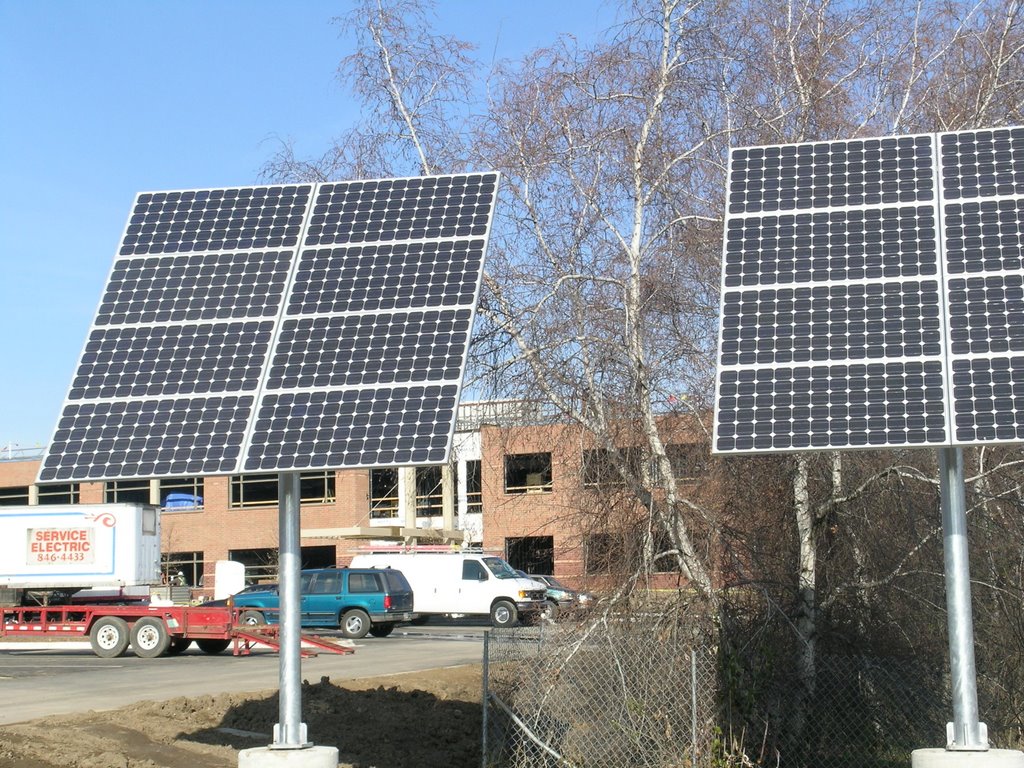
The solar panels above will add electricity to the new Madison offices of the Wisconsin Energy Conservation Corporation (WECC), administrator of Focus on Energy programs.

Along with other panels not shown, the installations have a rated capacity of more than 19 kW, making them collectively one of the largest installations in the state, second only to an installation on the campus of the UW-Green Bay.

Maybe Amtrak's time has arrived

Monday, November 20, 2006

Dave Zweifel speculates on the future of Amtrack in a Capital Times commentary:
"I have always wondered why the Amtrak debate is so emotional and at times acrimonious. It really needn't be, especially now. At a time of high oil prices, growing highway and airport congestion and record rail freight volumes, we should be embracing rail and developing it as quickly and as responsibly as we can.

"We should get beyond the debate of a few hundred million dollars of operating costs and begin to realize (what) the potential rail passenger service has to offer with the right level of investment and a clearly defined federal policy."

That's just a piece of the refreshing testimony that Amtrak's new president, Alex Kummant, gave to the House Railroads Subcommittee shortly after taking over the job in September.

Renewable energy cleans up in mid-term elections

Friday, November 17, 2006

RENEW's executive director Michael Vickerman offers a perspective on November's elections:

The gale-force winds that reshaped the political landscape this November augur well for new initiatives to substitute fossil fuel use with renewable energy.

To a degree unmatched in previous elections, candidates articulated an energy agenda that emphasized greater reliance on bioenergy, wind, solar, and conservation—and won, often by convincing margins. The renewable energy tide swept through not only both chambers of Congress but also many statehouses across the country. Only the Southeastern states seemed to escape its impact.


Read the full commentary here.

Point's Emy J restaurant heats water with the sun

Thursday, November 16, 2006

The lastest issue of the newsletter from the Citizens Energy Cooperative features a story about the hot water installations of one of the coop's members:

Located in the heart of Stevens Point, Wisconsin, is a quaint café which serves a variety of coffee drinks, ice creams and sandwiches. Emy J’s coffee shop and wi-fi hot spot is a charming nitch located in the center of the busy college town. Owner Guy Janssen is dedicated to being environmentally responsible and in the spring of 2006 he had over 150 square feet of solar collectors installed on the roof of his restaurant by Solar Mining Company.

It wasn’t long after the installation on Emy J’s that Guy purchased another renewable energy system, this time for his home. In September of 2006 the Janssen’s had a 320 square foot panel ground mounted at the site of their new home in Stevens Point, Wisconsin. The collector which they purchased from the Citizens Energy Cooperative of Wisconsin will be used for both domestic hot water and space heating. The home system that he purchased will be, “heating the hot water and home through the radiant floor system,” said Guy.

More and more often customers of the Citizens Energy Cooperative are choosing, just like Guy did, to have a larger system installed on their home for space heating as well as their domestic hot water needs. The Janssen’s house has a radiant floor system, which is an ideal application for solar hot water. Hot water runs through the system in the floor to heat the house, in conjunction with a solar application– the energy is free from the sun!

If you are interested in receiving more information on the Citizens Energy Cooperative, our products and services or setting up a site assessment, please contact Ashley at 800-504-7331 and take the first step to becoming a satisfied customer like Guy!

Coal plant faces stiff opposition

Wednesday, November 15, 2006

An article by Carl Jaeger in The Badger Herald reports on hearings about the UW coal-burning heat and power plant:

The permit for the Charter Street coal plant is up for renewal, and University of Wisconsin students are taking the opportunity to spread environmental awareness.

UW Students in the Wisconsin Public Interest Research Group are taking advantage of this opportunity to increase student knowledge about the plant itself and about alternative energy sources. The coal permit determines how much pollution can be emitted into the atmosphere by a particular plant. . . .

WISPIRG, an environmental grassroots organization, said the coal-powered plant uses “dirty technology” and non-renewable fuel sources, which the group calls “outdated,” in a press release.

“We have a very dirty plant on Dayton and Charter,” Lauren Crane, a WISPIRG media intern, told The Badger Herald.

The coal-burning plant on the UW campus is the second worst sulfur dioxide and nitrogen oxide polluter in Dane County, according to the WISPIRG website. The site also said the UW plant pollutes area lakes and causes global warming pollution.

AG wins suit on appliance efficiency standards

Tuesday, November 14, 2006

The Fond du Lac Reporter and other newspapers around the country carried the following story:

MADISON — The federal Department of Energy (DOE) will start setting new standards to sharply increase the energy efficiency of many domestic appliances under an agreement reached with several state attorney generals.

Appliances impacted include home ranges, ovens, air conditioners and dishwashers. This action settles a federal lawsuit against DOE brought by New York and a coalition of 14 other states, including Wisconsin, the City of New York and three public interest groups, according to a press release from Wisconsin Attorney General Peg Lautenschlager.


Read the full story.

Subsidies for fossil fuels vs. wind

Monday, November 13, 2006

From a fact sheet published by the American Wind Energy Associaiton (AWEA):

U.S. subsidies for oil, natural gas, coal, nuclear, and hydro power totaled approximately $500 billion from 1950 to 1977 (in 2004 dollars). In the last century, this investment created an abundance of affordable domestic energy, powering strong economic growth. It also contributed to a heavy reliance on fossil fuels.

Today’s rising energy demands – and volatile prices – reveal a need for a more diverse energy supply.

RENEW questions new Wisconsin crude oil pipeline

Friday, November 10, 2006

RENEW Wisconsin requested preparation of a full environmental impact statement (EIS) by the U.S. Army Corps of Engineers on the proposal and application of Enbridge Energy, Limited Partners to construct two parallel 321-mile long pipelines through Wisconsin to carry crude petroleum from Alberta tar sands to refineries south of Chicago.

Enbridge Energy must receive numerous permits from the U.S. Army Corps of Engineers because the pipeline would cross dozens of streams and wetlands.

RENEW Wisconsin submitted comments to the Corps and raised several concerns about the need for the pipeline: 1) How much petroleum can be extracted from the tar sands; 2) how much natural gas will be available for the extraction process; 3) how much the refined petroleum will help U.S. gasoline supplies compared to ethanol production; and 4) how much of the refined product will even reach Wisconsin.

In the end, RENEW said:

Enbridge Energy makes several unsubstantiated and questionable assertions in its application and related materials, and those assertions needs examination from all points of view to be certain they reflect various scenarios for the proposed project.

RENEW Wisconsin requests the opportunity to supply further documentation and testimony on the issues discussed above as part of the preparation of the EIS.


Read the complete letter.

ATC backs study request on Tuesday's ballot

Monday, November 06, 2006

With all the election hoopla, don’t forget the referendum on a study of transmission lines in Dane County. This comes from a story by Judy Newman in the Wisconsin State Journal:

American Transmission Co. has taken out full-page ads in today's Wisconsin State Journal and The Capital Times urging a "yes" vote on Tuesday's Dane County referendum on power lines.

The referendum asks county voters whether a new, independent study should be conducted to see if the county truly needs more high-power transmission lines.

It's not that the public utility company in charge of most of those towering lines in Wisconsin thinks the outcome will change. Mark Williamson, ATC's vice president for major projects, called the referendum question "stupid" in a telephone interview Friday. He said it's a moot issue because the state Public Service Commission will conduct a study before deciding whether the lines can be built.

The End of Cheap Oil, The Future of Food

Friday, November 03, 2006

• Oil is a finite resource and world supplies will peak soon.
• Fuel prices will go sky high.
• Trucking food to our supermarkets will not be affordable.
• How will we produce enough food locally to feed ourselves?
• How many farms will we need?
• How will farmers, as well as the rest of us, adjust to the lack of fuel, pesticides and fertilizers?

The West Waubesa Preservation Coalition presents:
The End of Cheap Oil and the Future of Food
Sat., Nov. 11, 10 - 5
Promega BTC Auditorium
5445 E. Cheryl Pkwy.
Fitchburg, 53711
Featuring showings of:

“The End of Suburbia”
(an edited version of the video about Peak Oil and its consequences for America)

“The Power of Community: How Cuba Survived Peak Oil”
(a video on Cuba’s response to the “Peak Oil” situation brought on by the collapse of the Soviet Union in 1990 and the end of cheap Soviet oil)

“The New Intervale”
(a documentary on the amazing 700-acre piece of land housing 12 organic farms, a farm incubator, a youth project, composting business and more in Burlington,

“Our Vision for the Northeast Neighborhood”
WWPC’s slide show on our alternative to a massive development just south of the Beltline on the western edge of Fitchburg.

Lots of Q&A, brainstorming and discussion about how to meet the challenge in Dane County.

Cool door prizes and displays from our co-sponsors!

Co-sponsors: Renew Wisconsin/Madison Peak Oil Group, Sustain Dane, Blue Moon Farm

Please download a flyer to circulate or post far and wide.

Draining Canada First

Thursday, November 02, 2006

Petroleum and Natural Gas Watch
November 2, 2006, Vol. 5, Number 8
Michael Vickerman, RENEW Wisconsin

Sating America’s prodigious energy appetite depends on the continued availability of Canadian energy sources. About 25% of the crude oil and 80% of the natural gas imported into the United States come from our very accommodating neighbor to the north. More than half of the fuel pumped out of Canadian wells heads south to keep us Yankees warm and happily tooling about on our highways.

Even though the Canadian economy is no less dependent on hydrocarbon energy than ours, Canada has been drilling as many wells as necessary to keep the high-maintenance American economy humming. If this pedal-to-the-metal production policy were applied to a non-strategic product like, say, maple syrup, few people would care about the consequences. But there is nothing on the horizon to replace the nonrenewable high-density energy sources that Canada so generously sends our way.

This begs the question: how long can Canada go on behaving like America’s most compliant energy colony?

Not very long, according to David Hughes, a petroleum geologist with the Geological Survey of Canada. Speaking before the World Peak Oil Conference held in Boston last week, Hughes painted a remarkably pessimistic picture of Canada’s energy future, especially regarding natural gas.

Continue reading on RENEW Wisconsin's blog.

Declaration of Dependence

Wednesday, November 01, 2006

When in the Course of human events it becomes necessary for the people to abandon civic spaces in which daily social and commercial Intercourse have, throughout history, bound neighbour with neighbour, customer with merchant, tradesman with client, manufactory with location, and citizen with community; and to indiscriminately pursue unfettered Motion and Isolation in the separate Vehicles to which their incomes entitle them; an unquestioning obeisance to the demands of motorized Movement requires that they should declare the causes which impel them to the separation.

We hold these truths to be self-evident: That all Motorists are created more equal than non-motorists; that they are endowed by Our Lord Economic Growth with certain unalienable Rights; that among these are the Right to drive wherever, whenever, and as much as they desire; and to do so in whatever size and type motor Vehicle shall please them; and that, moreover, they are entitled to as much Energy and motoring Infrastructure as shall prove needful for these purposes. That to secure these Rights, Governments are instituted among oil Companies, motor vehicle Manufacturers, the highway Lobby, and the land development Cabal, deriving their just Powers from Consumers as evidenced by their vehicle purchases, fuel consumption, and selection of residences that make Driving a “necessity”. That whenever any Form of historic municipal arrangement impedes the right to drive and park without limitation, it is the duty of departments of Transportation, acting on behalf of Motorists, to alter or to demolish it, and institute a new Master Plan, laying its foundation on an expansive Network of limited-access Highways, Streets wide enough for two ladder-type fire Trucks to pass with parked vehicles on both sides, turn Lanes, access Roads, drive Aisles, and abundant off-street Parking, as to the Motorists shall seem most likely to effect their Motoring Ease.

Prudence, indeed, will dictate that city and village Designs long established should not be changed for light and transient causes; and accordingly all experience hath shewn, that Motorists were sometimes disposed to suffer, while evils were yet sufferable, than to right themselves by abolishing the Delays to which they had become accustomed. But when traffic Bottlenecks persist into the 21st Century, and insufficient free Parking near the front door of their every Destination continues to impede not merely the Motorist but Progress itself, it is the Motorists’ right, indeed it is his duty, to condemn and pave over such confined Spaces, and to provide, moreover, abundant Capacity for future traffic Growth.


This message is brought to you as a public service by Hans Noeldner, 608-444-6190. Although I am a trustee for the Village of Oregon, the views herein are my own.

Natural gas has eight years left - Discussion Nov. 2

Tuesday, October 31, 2006

At our November 2 meeting of the Madison Peak Oil Group, we'll discuss an article on natural gas procution in Canada, a major natural gas supplier to the U.S.

Statistics from the Canadian Association of Petroleum Producers (CAPP) concerning confirm the peak of natural gas in North America:

Look at the number of wells drilled by year, followed by production for that year:

1997: 4,842 – 15.7 Bcf/d;
1998: 4,991 – 16.1;
1999: 7,018 – 16.6;
2000: 9,078 – 17.1;
2001: 10,757 – 17.4;
2002: 9,061 – 17.4;
2003: 12,951 – 16.9;
2004: 15,126 – 17.0.


The figures show that 15,126 natural gas wells produced only 1.3 billion cubic feet per day more in 2004 than 4,842 produced in 1997.

Fuel analyst David Hughes concluded that North America peaked in terms of conventional natural gas production in 2001–2002.

Read more at The Republic.

The Madison Peak Oil Group will meet for a brown bag lunch and discussion at 12:00 noon in the conference room of RENEW Wisconsin, 222 S. Hamilton, Madison.

The meeting is open to anyone.

ASPO-USA report on November 2

Monday, October 30, 2006

When the Madison Peak Oil Group meets at noon on November 2, RENEW Executive Director Michael Vickerman will report on what he learned at the ASPO-USA conference held over the weekend of October 27-29 in Boston.

The end of cheap oil (and natural gas) stood out sharply in the reports on Canada's struggle to maintain natural gas production at the current level, given that existing well production will fall 28% this year, according to Vickerman.

The Madison Peak Oil Group will met in the conference room of RENEW Wisconsin, 222 S. Hamilton Street.

ASPO-USA is the Association for the Study of Peak Oil and Gas - USA with a Web site at http://www.aspo-usa.com.

Madison Peak Oil Group will meet November 2

Friday, October 27, 2006

Everyone is welcome to attend November's monthly meeting of the Madison Peak Oil Group.

Meeting Date and Time: November 2, 2006, 12:00 – 1:00 pm
Location: RENEW Wisconsin Conference Room, 222 S. Hamilton Street

DRAFT Agenda

1. Introductions

2. Announcements/miscellaneous
a. Review of event with Randy Udall

3. Plans for “End of Cheap Oil; Future of Food” on November 11

4. Presentation on activities of Sustain Dane

5. Next meeting: Dec. 7

New ethanol plant going up near Johnson Creek

Thursday, October 26, 2006


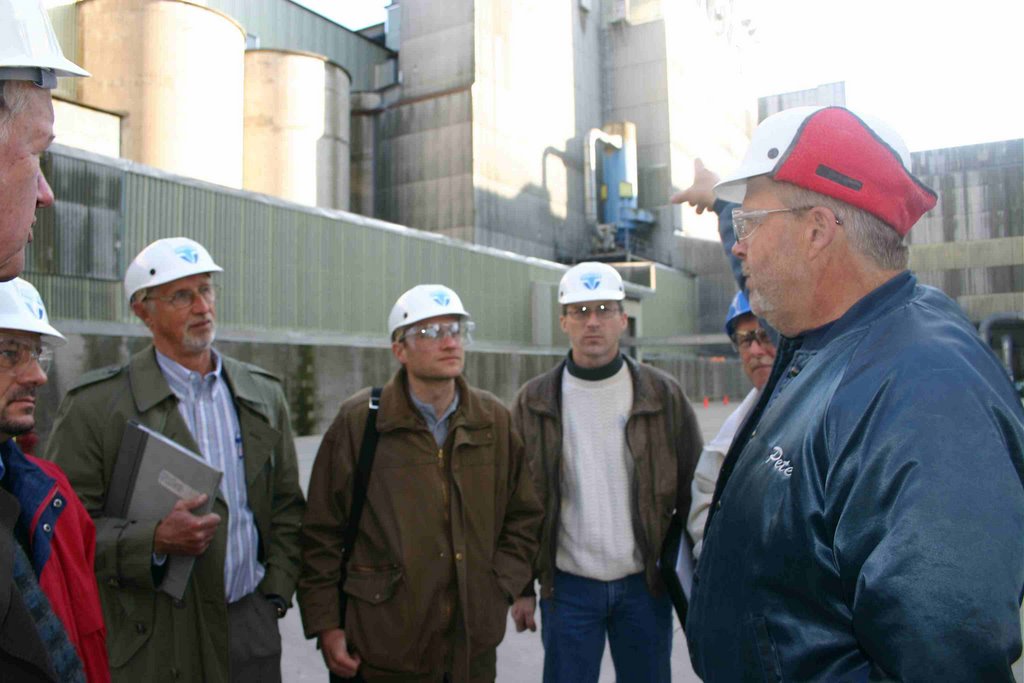
Pete Dempsey (far right), an employee of Renew Energy, conducted a tour of the old barley malting plant, previoulsy owned by Ladish and Cargil. RENEW Energy recently purchased the site for a new ethanol production facility south of Johnson Creek. Joining the tour were (left to right) Gerry Flakas (holding notebook), a RENEW board member; Ken Walz, a chemistry instructor at the Madison Area Technical College; two other instructors from MATC.

Win $10k with your ad for clean energy

Tuesday, October 24, 2006

SmartPower and You Tube have teamed up to give people across the country the chance to create their own ad on clean energy! (and to win $10,000!)

If you’re so inclined, give SmartPower your best video. Details at SmartPower contest.

Brian F. Keane
President
SmartPower

Peak oil underlies preservation effort

Friday, October 20, 2006

The West Waubesa Preservation Coalition (WWPC) seeks to preserve 250 acres of farmland along the edge of Madison suburb Fitchburg.

The WWPC uses peak oil arguments as the primary reasons for saving the land and lays out the following tasks for itself:

Secure land for locally grown food. How will Madison and surrounding communities deal with food shortages caused by high fuel prices?

Teach people how to grow food without fossil fuel inputs. Many people will want and need to grow food themselves, yet have no experience in food production, especially without chemical fertilizers and pesticides.

Create structures for people to grow, buy, and sell food locally. Most of the farmland in the area is growing corn and soybeans. We need to grow fruits, vegetables, and grains, and to raise animals for eggs, milk, and meat.


To reinforce the message and their effort, the WWPC will show "The End of Suburbia" in the Promega BTC Auditorium, 5445 E. Cheryl Pkwy, at 10:00 a.m. on November 11.

Payback Analysis: An Impediment to Sustainability

Thursday, October 19, 2006

From the most recent edition of Petroleum and Natural Gas Watch by Michael Vickerman:

To a traditional economist, one who boils life’s complexities down to income, outflows and the time value of money, our decision to install a solar domestic hot water system doesn’t make a whole lot of sense, principally because the return is tiny relative to the large up-front outlay.

But in reducing this transaction to simple, measurable flows of dollars in and dollars out, economists filter out a great deal of relevant information that might confound their notions of rational economic decision-making. Though economists will concede that there are other valid factors besides pure price considerations on which to base one’s purchasing or investment decisions, they aren’t likely to register meaningfully in the economic models they use. Instead, these factors are categorized—and marginalized—as “externalities”—a semantic purgatory designed to prevent these considerations from crimping corporate America’s style.


Read the full commentary at RENEW's News & Views.

Energy Robin Hood to speak, October 18

Wednesday, October 18, 2006

Randy Udall sees himself as a modern-day Robin Hood of sorts, taking from the rich and giving to the poor. Udall heads the Community Office for Resource Efficiency in Aspen, Colorado, which oversees the world's stiffest tax on energy use. The tax, called "REMP" or Renewable Energy Mitigation Program, requires owners of new homes larger than 5,000 square feet to pay fees of up to $100,000 for excess energy use. -- The Osgood File, July 31, 2003
Randy Udall, whose father (Morris) and uncle (Stewart) were conservation giants, will discuss America’s energy challenges at 7:00 p.m. on October 18, 2006, at the Pyle Center, 702 Langdon Street, Madison.

Udall also writes prolifically and insightfully on energy issues and the coming end of cheap oil. His articles include: Stud Muffins and Kilowatt-hours; When will the Joy Ride End?; Methane Madness; Cleopatra to Columbia.

He will also speak at 8:30 a.m. on the same day at the Monona Terrace during the Sustainability Energy Efficiency conference of the Wisconsin Green Building Alliance.

Sponsored by Madison Peak Oil Group, RENEW Wisconsin, Gaylord Nelson Institute for Environmental Studies, and Wisconsin Green Building Alliance.

Links:
Community Office for Resource Efficiency – www.aspencore.org
Madison Peak Oil Group – www.madisonpeakoil-blog.blogspot.com
RENEW Wisconsin – www.renewwisconsin.org
Gaylord Nelson Institute - www.ies.wisc.edu
Wisconsin Green Building Alliance – www.wgba.org

U.S. Energy Flow - In the Belly of the Beast

Tuesday, October 17, 2006

Randy Udall, whose father (Morris) and uncle (Stewart) were conservation giants, will discuss America’s energy challenges at 7:00 p.m. on October 18, 2006, at the Pyle Center, 702 Langdon Street, Madison.

Udall also writes prolifically and insightfully on energy issues and the coming end of cheap oil. From U.S. Energy Flow:

From a biological perspective, think of the U.S. economy as the largest “animal” the planet has ever seen—a living, breathing T. Rex Americus,whose energy appetite is gargantuan. If we dissect the beast to study the energy flows that sustain it, we end up with [a]chart, produced at Lawrence Livermore National Laboratory. . . .Our economy is not, metabolically speaking, a thrifty creature. About 55 percent of the energy that flows into the economy is ejected as T. Rex dung. This waste carries with it a huge pollution and climate burden.

Udall, who founded the Community Office for Resource Efficiency, will also speak at 8:30 a.m. on the same day at the Monona Terrace during the Sustainability Energy Efficiency conference of the Wisconsin Green Building Alliance.

Madison Peak Oil Group, RENEW Wisconsin, Gaylord Nelson Institute for Environmental Studies, and Wisconsin Green Building Alliance sponsor the evening event.

Links:
Community Office for Resource Efficiency – www.aspencore.org
Madison Peak Oil Group – www.madisonpeakoil-blog.blogspot.com
RENEW Wisconsin – www.renewwisconsin.org
Gaylord Nelson Institute - www.ies.wisc.edu
Wisconsin Green Building Alliance – www.wgba.org

When Will the Joyride End?

Monday, October 16, 2006

Randy Udall, whose father (Morris) and uncle (Stewart) were conservation giants, will discuss America’s energy challenges at 7:00 p.m. on October 18, 2006, at the Pyle Center, 702 Langdon Street, Madison.

Udall also writes prolifically and insightfully on energy issues and the coming end of cheap oil. From When will the Joy Ride End?:

During the last century oil has transformed the world. British coal launched the Industrial Revolution, but American petroleum put the pedal to the metal. No other material has so profoundly changed the face of the world in such a short time. . . . Soon, experts say, world oil production will reach an all-time high, an apex, a peak. Then, after a short plateau, it will decline forever. What historians will someday call the Oil Era will last only about 250 years. In 2000 we are closer to the Era’s end than to its beginning.

He will also speak at 8:30 a.m. on the same day at the Monona Terrace during the Sustainability Energy Efficiency conference of the Wisconsin Green Building Alliance.

Madison Peak Oil Group, RENEW Wisconsin, Gaylord Nelson Institute for Environmental Studies, and Wisconsin Green Building Alliance sponsor the evening event.

Links:
Community Office for Resource Efficiency – www.aspencore.org
Madison Peak Oil Group – www.madisonpeakoil-blog.blogspot.com
RENEW Wisconsin – www.renewwisconsin.org
Gaylord Nelson Institute - www.ies.wisc.edu
Wisconsin Green Building Alliance – www.wgba.org

Minneapolis shows success of light rail

Wednesday, October 11, 2006

Rob Zaleski reports in The Captial Times on Minneapolis' current light rail system and plans for the future:

If you've been to Minneapolis lately and ridden on its sleek, efficient Hiawatha light rail line, you probably understand why it continues to draw huge ridership. (One million passengers in August alone, according to city officials.)

Even skeptics who fought the 12-mile system — which began operating in 2004 and links downtown Minneapolis with the airport and the Mall of America — have been won over, locals say.

Now, Minnesota voters are contemplating an even bolder step to alleviate the gridlock that paralyzes rush-hour commuters in both Minneapolis and St. Paul. They will vote next month on a proposed constitutional amendment that would provide $100 million or more per year for a network of new rail lines, bus routes and park-and-ride lots that transit advocates believe could double ridership in the Twin Cities area by 2020.

Fitchburg-to-Madison bike trail won't get paved for 2 years

Tuesday, October 10, 2006

From an article by Maureen Backman in The Capital Times:

FITCHBURG - Due to minimal funding for bicycle projects in Wisconsin's Transportation Enhancement budget, a six-mile stretch of the Badger State Trail between Madison and Fitchburg will not be paved for two years.

"We feel left high and dry in the state transportation budget," said Fitchburg Ald. Steve Arnold.

Arnold - along with Rep. Spencer Black, D-Madison, Rep. Terese Berceau, D-Madison, Rep. Sondy Pope-Roberts, D-Verona, and Bicycle Federation of Wisconsin Executive Director Dar Ward - expressed concern over lack of state funding for bicycle projects at a press conference Monday.

Black said the 2005-07 budget for the Department of Transportation was an "unfortunate decision" by the state Legislature that devastated the state's bicycle projects. The budget totaled $5.8 billion, but Transportation Enhancements amounted to less than 0.2 percent of that budget. Black said the Legislature agreed to take away 70 percent from the bicycle fund, leaving 92 projects in the state unfunded.

Work begins on state's largest ethanol plant

Monday, October 09, 2006

From an article by Steve Sharp in the Watertown Daily Times:

Government officials from the central part of Jefferson County joined Gov. Jim Doyle Tuesday afternoon to celebrate the groundbreaking of the Renew Energy ethanol plant at the former Ladish malting facility. Doyle arrived with further good news of a $1.5 million loan to the firm to allow it to start off on the right foot.

Renew Energy has undertaken renovation and construction of the ethanol plant that is expected to produce 130 million gallons of ethanol per year. The new facility will employ as many as 100 workers. The firm expects to utilize 50 million bushels of corn per year, much of which will come from the area.

The 12 Suggested Steps of Oilaholics Anonymous

Friday, October 06, 2006

Terry Carpenter, an activist in many conservation causes, provided the following program for all of us oil addicts:

1. We admitted we were powerless over Oil Consumption -- that our lives had become Unsustainable.
2. Came to believe that preparing for Powerdown could restore us to Sustainability.
3. Made a decision to turn our will and our lives over to the care of the Relocalization Network and give up the false hope that Technology would rescue us.
4. Made a searching and fearless inventory of our Ecological Footprints.
5. Admitted to the Planet, to ourselves and to another human being the exact nature of our Unsustainable Lifestyle.
6. Were entirely ready to have the Universe remove all the defects of Consumerism.
7. Humbly asked the Natural World to help us see that Less is More and to redirect our life energy toward our Dreams.
8. Made a list of how we harmed Future Generations, and became willing to make amends to them.
9. Made direct amends to such people wherever possible, by Living Within Our Ecological Limits.
10. Continued to take an Energy Inventory and when we were Over-consuming, promptly admitted it.
11. Sought through prayer and meditation to improve our conscious contact with the Universe, praying only for knowledge and acceptance of the Oil Depletion Protocol and the power to carry that out.
12. Having had a spiritual awakening as the result of these steps, we resolved to carry the message to Oilaholics, and to practice the Plan C principles in all our affairs.


The Simplicity Prayer -- Please grant me the strength to reject over-consumption, the courage to live a simpler life and the wisdom to cherish community.

You can comment on regional transportation plan

Thursday, October 05, 2006

According to the Madison Area Regional Planning Organization:

The draft Regional Transportation Plan 2030 identifies transportation improvements, strategies, and actions that will shape our regional transportation system into the future. The objective of the plan is to build agreement on transportation investments that balance roadway, public transit, bicycle, pedestrian, and other transportation needs, while supporting regional land use, economic, and environmental goals.

Unfortunately, the plan seems to be completely void of any recognition of peak oil and the end of cheap oil.

Fortunately, anyone can submit a comment at the bottom of the organization's Web page.

State unveils home energy, heating programs

Wednesday, October 04, 2006

From an article in the LaCrosse Tribune:

Wisconsin will offer a new “furnace bounty” to homeowners that upgrade to more energy-efficient models as part of the state’s energy-saving incentive programs, the Doyle administration announced Friday.

The programs are designed to help working families save on their heating bills this winter, as well as assist low-income households, according to the statement from Gov. Jim Doyle’s office.

“As energy costs remain high, it is important for people to realize they have the ability to reduce energy consumption without sacrificing comfort or drastically altering their lifestyle,” Lt. Gov. Barbara Lawton said during an appearance Friday in La Crosse.

The programs also include a new home performance implementation bonus and rebates for energy-efficient light bulbs.

Madison Peak Oil meets noon, Thurs., Oct. 5

Tuesday, October 03, 2006

Meeting Date and Time: October 5, 2006, 12:00 – 1:00 pm
Location: RENEW Wisconsin Conference Room, 222 S. Hamilton Street

DRAFT Agenda

1.Introductions

2.Announcements/miscellaneous

3.Preparations for Randy Udall speech (Community Office for Resource Efficiency)
7:00 p.m., October 18, Pyle Center, 702 Langdon St.
- Booth
- Sign up sheet at event
- Other

4.Peak Oil for local officials
a. Discussion of next steps for local government outline (attached)
b. Possible collaboration with Sustain Dane

5.Co-sponsorship of events with Sustain Dane
a. Tuesday, Oct. 10. David Korten, The Great Turning Point. First Unitarian, 7:30 p.m.

6.Transportation
a. What’s happening at city, county, and state level?

7.Next meeting: Nov. 2

State firm's crane runs on veggie oil

Monday, October 02, 2006

From The Capital Times on September 30, 2006:

MILWAUKEE (AP) - A Wisconsin company is testing a crane that uses vegetable oil to run its hydraulic lift system.

Most hydraulic systems use petroleum products that can damage the environment if spilled. Manitowoc Crane Group designed its truck-mounted crane to be used in or near wetlands, lakes and other environmentally sensitive areas.

"It worked just like a regular boom truck. No problems," said Jeff Johnson, chief operating officer of Scott Powerline and Utility Equipment, a Louisiana company testing the crane.

Manitowoc Crane Group had been worried that the vegetable oil would degrade or become rancid with heavy use, said John Lukow, vice president of sales and marketing.

But so far, the test has gone well. Scott Powerline has put more than 1,000 hours on its crane as it installs power line polls near Dallas.

Manitowoc now plans to offer its eco-friendly crane to others. In addition to using vegetable oil in the hydraulic system, the crane runs on a soy-based biodiesel fuel.

The company doesn't expect the veggie crane to be a big seller, but a spokesman said it gives construction companies another option.

"You never know where they're going to end up, and where there are going to be environmental options," spokesman Tom Cioni said.